KIH: Keyboard In my Hand
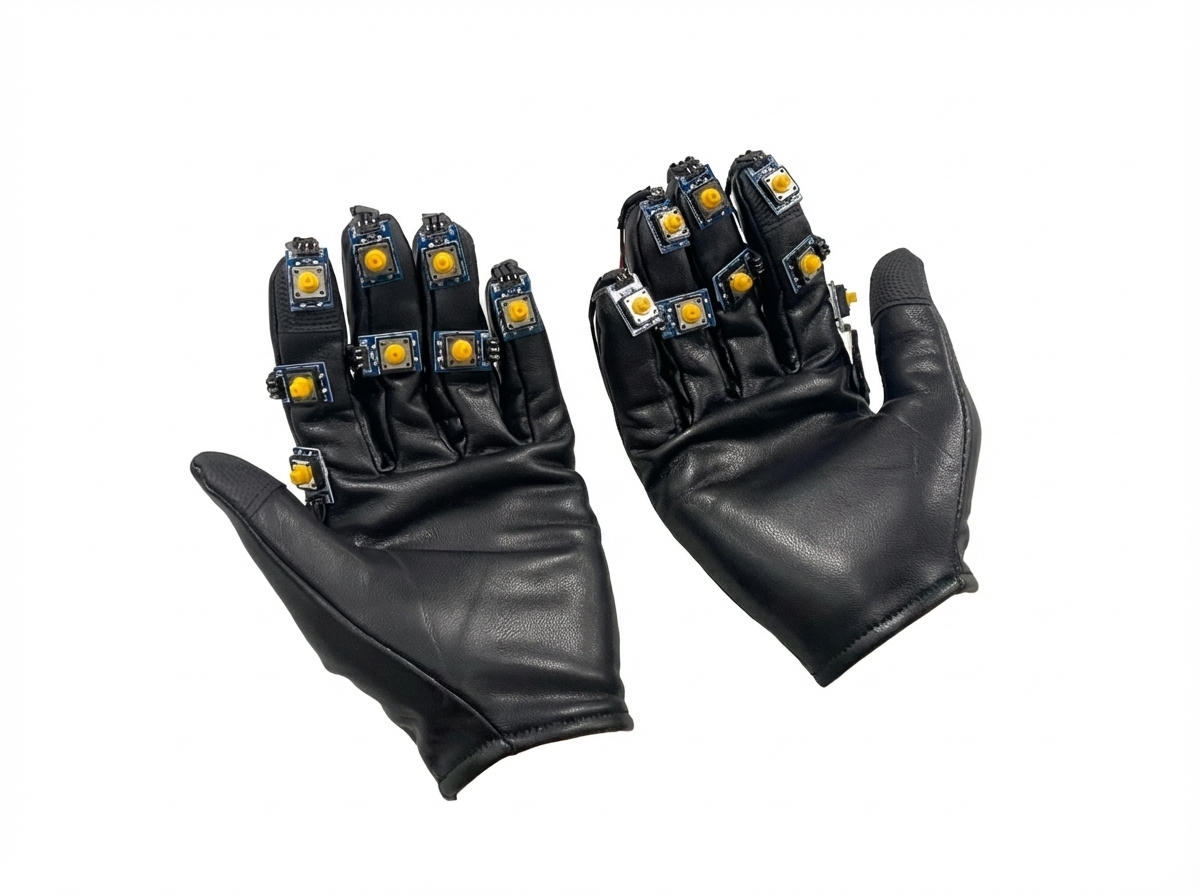
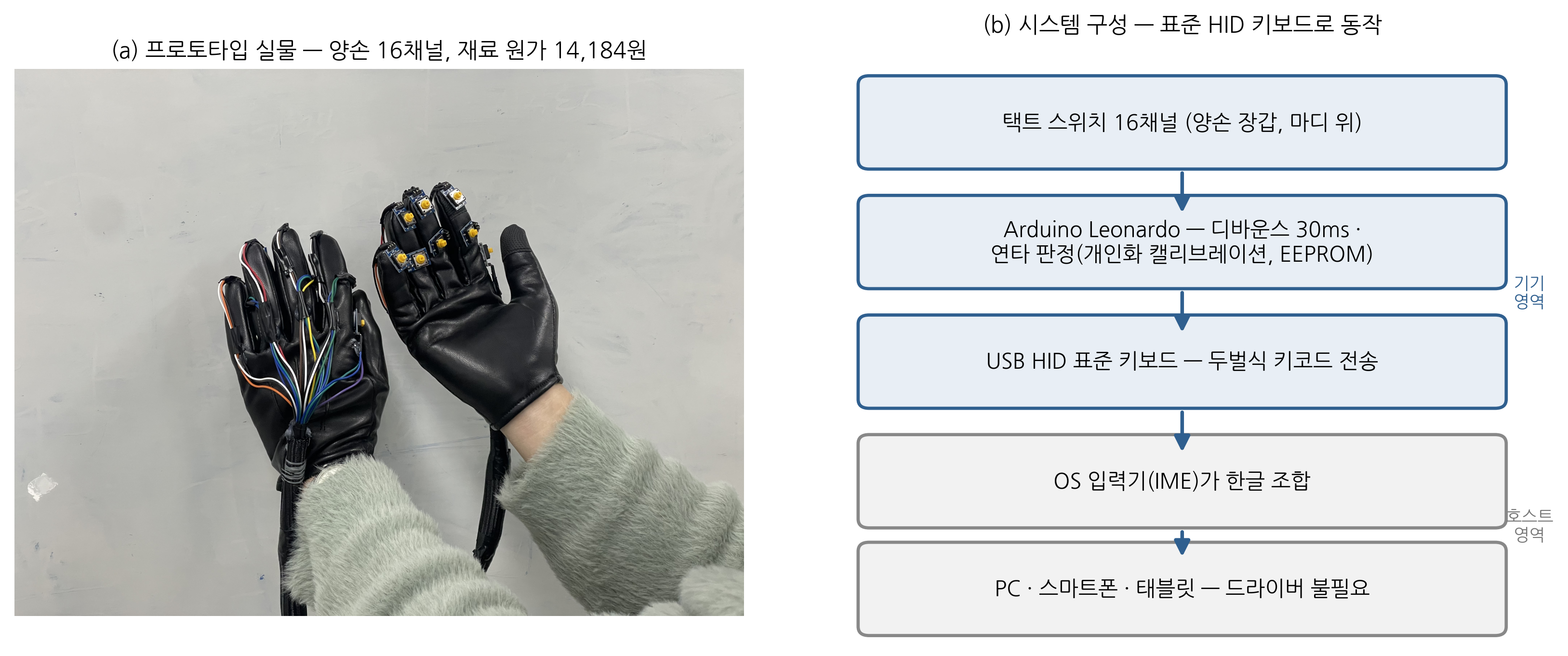
A glove-type wearable Hangul keyboard for eyes-free Korean text entry. 16 tactile switches are embedded across the phalanxes of a pair of gloves (8 per hand) and pressed by the thumbs. Input is sequential rather than chorded; repeated taps on the same button add strokes, mirroring the graphical derivation principle (가획) of Hangul. Enumerates as a plug-and-play USB HID keyboard — no drivers or companion app required.
Motivation
Three gaps drove the design:
- VR/AR text entry, where physical keyboards break down;
- affordable tactile input for Korean visually-impaired users;
- posture-related VDT syndrome (7.05 M reported cases in Korea, 2024).
Mapping & Input Method
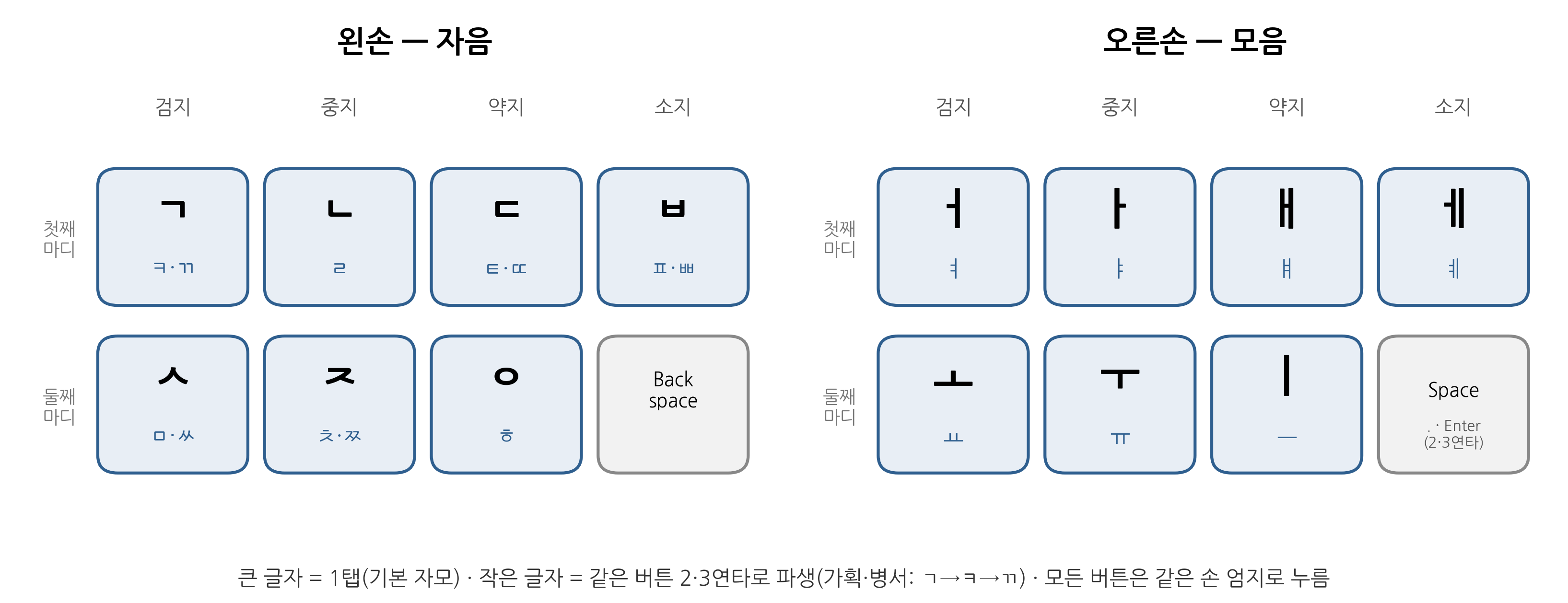
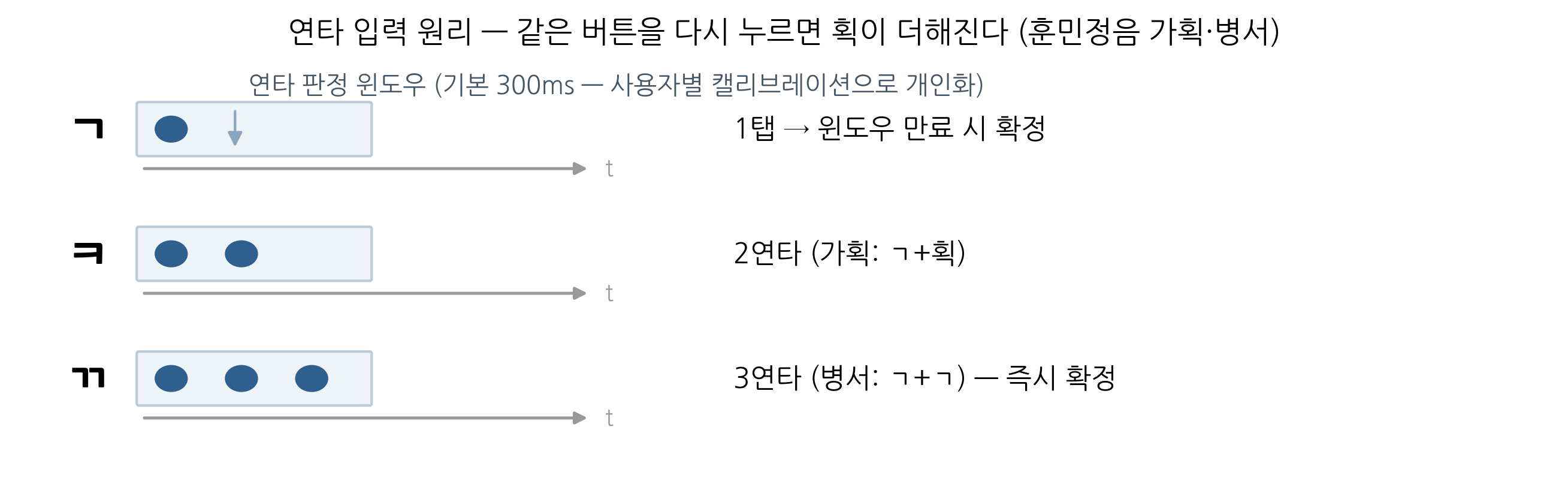
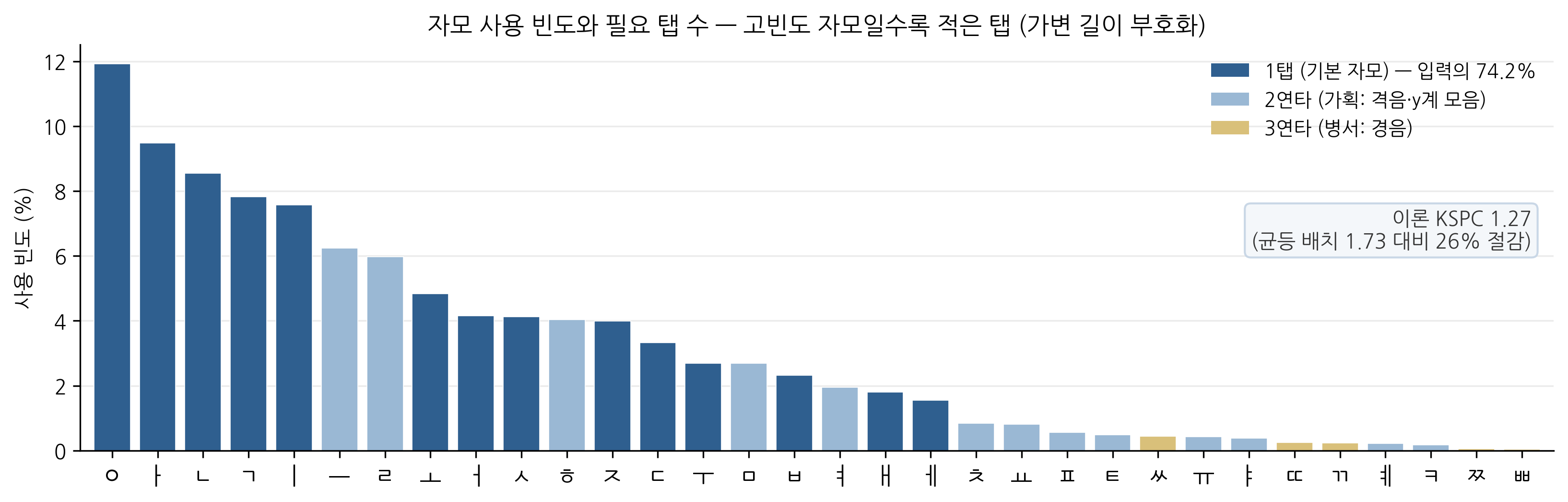
Each of the 16 buttons is mapped to a base jamo. Repeated taps on the same button add strokes — the same operation that graphically derives ㅋ from ㄱ, ㄲ from ㄱ, or ㅏ from ㅣ — so no separate shift key is needed.
Results
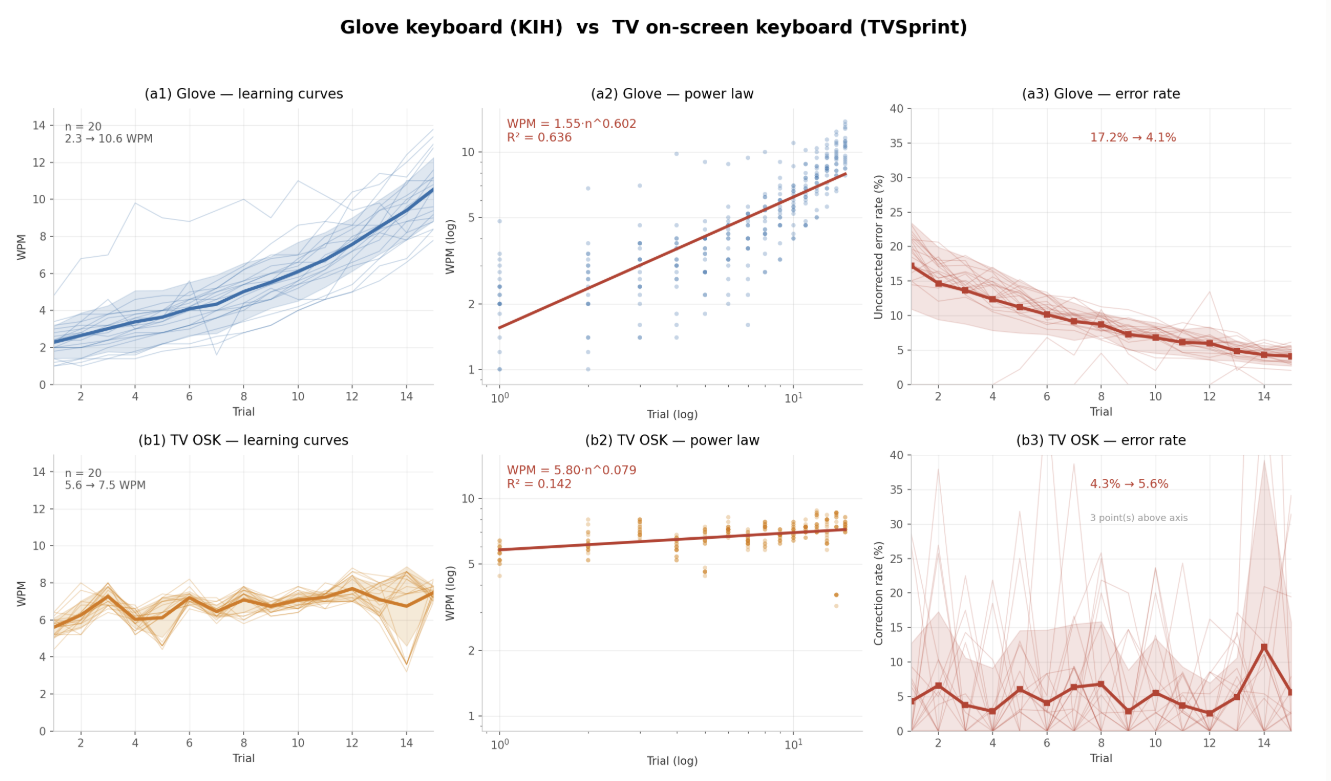
A within-subject study with 20 participants compared KIH against a TV-style cursor on-screen keyboard. After 10 minutes of training per condition, each participant completed 15 one-minute trials typing random words without looking at the device.
- 2.3 → 10.6 WPM from trial 1 to 15 (4.6×), while the cursor keyboard plateaued at 5.6 → 7.5 WPM; KIH overtakes it at around trial 9.
- Error rate 17.2% → 4.1% — speed and accuracy improved together.
- KSPC 1.27 — a 26% improvement over frequency-blind layouts; 74.2% of input is a single tap.
- Per-user tap-window calibration; total BOM cost ₩14,184.
System & Stack
Arduino Leonardo (ATmega32u4), native USB HID. Firmware in C++ (Arduino); calibration, study and analysis tools in Python. Hardware: 16 tactile switches, gloves, wiring harness. MIT license.
Beyond the Glove: KIH-XR
The input method does not depend on the glove. KIH-XR runs the same 16-spot layout on camera hand tracking alone: MediaPipe estimates 21 joints per hand, virtual buttons are placed on the phalanxes, and a thumb-tip touch counts as a tap. The firmware's multi-tap state machine is ported unchanged, and a calibration wizard fits each user's sweet spots, tap radius and tap window. Only the joint source is device-specific, so headsets that already track hands (Vision Pro, Quest) could use the same layout without extra hardware. Built as a live webcam demo for the Creative Design Festival.
Recognition
- Bronze Prize, 15th SNU College of Engineering Creative Design Festival (Sep 2026).
- Grand Prize, SNU Mechatronics Competition (Dec 2025).
Role
Team of 4, team lead. Led the design and pitch; earned faculty praise for a compelling presentation.